Dr. Gymbro
←

#whey protein

18 articles
nutrition

20 g de whey n'ont pas stimulé la synthèse musculaire chez les hommes âgés

BY DR. GYMBRO ·

Dans une étude de Maastricht portant sur 45 hommes d'environ 69 ans, le whey, les protéines végétales et les mélanges végétaux enrichis en leucine n'ont pas différé en termes de synthèse des protéines musculaires. Malgré des concentrations sanguines d'acides aminés variables – le whey étant le plus élevé et le mélange enrichi en leucine affichant le pic de leucine – aucune dose n’a dépassé le niveau basal à jeun. La leçon principale : la quantité de protéine compte davantage que sa source chez les seniors.
A bright, modern editorial still life on a clean, softly lit kitchen countertop of pale ash wood. In the foreground, a tall glass of creamy off-white protein shake sits beside a small ceramic spoon holding a mound of fine white powder. Next to it is a minimalist matte-white scoop and a small glass dish with a few pinches of powder. Scattered nearby are a few natural elements: a halved banana, a handful of raw almonds, and a sprig of fresh green herbs for a splash of color.

In the soft-focus midground, an older woman in her late 60s with silver-gray hair, wearing a sage-green linen shirt, smiles gently as she lifts a glass. Her face is slightly blurred and warm, bathed in natural window light. Beside her, slightly further back and out of focus, an older man in a navy sweater leans on the counter, a neutral presence that subtly contrasts with her. A wide window behind them floods the scene with soft morning light, with sheer curtains and a few leafy houseplants.

The color palette is muted and fresh: warm cream, soft sage, pale peach, and light oak, with a touch of terracotta from a small ceramic bowl. Shallow depth of field, creamy bokeh, subtle film-like grain, and gentle shadows give it a contemporary lifestyle-magazine feel. Composition follows the rule of thirds, with the shake and powder on the left third and open negative space on the right for headline overlay. The mood is calm, optimistic, and health-focused, polished like a trendy wellness journal cover, with no text, no logos, and no futuristic or sci-fi elements.
nutrition

3 g d’HMB + 40 g de whey : le boost surprenant qui profite aux femmes, pas aux hommes

BY DR. GYMBRO ·

On pensait que les compléments anabolisants profitaient surtout aux hommes plus âgés. Une nouvelle étude de traçage montre le contraire : ajouter 3 g de calcium‑HMB à un shake de 40 g de whey augmente la synthèse des protéines musculaires chez les femmes âgées, mais pas chez les hommes. L’HMB réduit également la dégradation musculaire tardive chez l’ensemble du groupe. Il s’agit toutefois d’une étude aiguë de trois heures, réalisée sur seulement 24 participants et avec des co‑auteurs d’Abbott Nutrition, ce qui ne constitue pas une preuve de gain musculaire à long terme. Voici le dosage, le moment de prise, qui pourrait en bénéficier et qui devrait l’éviter.
A bright, minimalist still life on a soft sage-green and warm cream backdrop, shot from a slightly elevated angle in natural morning window light. In the center sits a matte ceramic bowl of creamy vanilla protein shake with a wooden spoon resting beside it. Next to it, a small glass jar with a few off-white probiotic capsules spilling onto a pale linen napkin. Around them are fresh, gut-friendly foods arranged with editorial restraint: a halved ripe banana, a small bowl of plain yogurt with a swirl on top, a few stalks of leeks, a handful of oats scattered on the surface, and a sprig of fresh mint. A tall glass of water with a lemon slice catches the light and casts a delicate caustic shadow across the table.

In the background, slightly out of focus, a folded gray gym towel and a sleek stainless steel shaker bottle hint at an athletic lifestyle without dominating the scene. The surface is a pale oak tabletop with subtle grain. A soft diffused shadow falls to the left, giving gentle depth.

The palette is calm and modern: sage green, oatmeal, warm white, soft butter yellow, and touches of terracotta from a small clay dish holding a pinch of sea salt. The composition leaves generous negative space on the right third for headline overlay. The mood is clean, wellness-focused, and quietly editorial, like a feature in a contemporary health and science journal. Shallow depth of field, crisp focus on the capsules and bowl, subtle film grain, and natural color grading. No people, no text, no logos, no futuristic elements.
nutrition

Flatulences protéinées ? Le probiotique BB536 réduit les odeurs, mais seulement chez certains intestins

BY DR. GYMBRO ·

Des flatulences malodorantes dues à un régime riche en protéines ? Un essai a évalué le probiotique *Bifidobacterium longum* BB536 chez des athlètes et a constaté une diminution de composés odorants comme le méthylmercaptan et l’ammoniaque, mais uniquement dans certains sous‑groupes. L’étude, petite et exploratoire, était financée par le fabricant du probiotique. Voici ce qu’est le BB536, pourquoi votre microbiote de base peut déterminer qui en bénéficie, et des solutions moins coûteuses à essayer d’abord.
A bright, minimalist editorial still life on a pale oat-colored linen surface, shot from a slightly elevated three-quarter angle in soft natural window light. On the left, a matte ceramic bowl of fine white collagen powder with a wooden scoop resting beside it, a light dusting of powder spilling across the linen. On the right, a matching bowl of creamy off-white whey powder with a brushed-steel scoop. Between them sits a small, neatly balanced stack of simple geometric wooden blocks and a single smooth gray stone, hinting at a scale or comparison without showing a literal scale. Behind them, a lightly blurred row of three clean amber glass supplement jars with plain cream labels, unbranded. A single rolled yoga towel and a pair of small chrome dumbbells sit softly out of focus in the background on a pale plaster shelf. Accents of muted sage green and warm terracotta appear in a ceramic cup and a folded napkin, giving the palette a calm, contemporary wellness-magazine feel. A thin, elegant sprig of dried eucalyptus lies at the edge of the frame. Shadows are long, gentle, and slightly cool, with a creamy shallow depth of field and fine grain. The composition leaves generous negative space across the upper third for title overlay, with a subtle gradient from warm ivory to pale gray-blue in the background wall. The styling is clean and modern like a trendy health journal website, with a refined, tactile, editorial photography look, balanced symmetry, and no text, no people, no futuristic or laboratory elements.
nutrition

Le collagène surpasse la whey pour la musculation dans une analyse de 78 essais ?

BY DR. GYMBRO ·

Une méta‑analyse en réseau de 2026 portant sur 78 essais randomisés et 4 755 participants a placé le collagène en première position pour les gains de force et de masse maigre lors d’un entraînement en résistance, devant la whey. Plus surprenant encore, aucun autre supplément protéiné n’a surpassé le placebo. Pourtant, le collagène est une protéine incomplète, pauvre en leucine, et les intervalles de confiance sont larges. Voici ce que montrent réellement les chiffres, pourquoi le résultat doit être confirmé par des comparaisons directes, et comment ajuster votre pile de suppléments en attendant.
A softly lit editorial still life on a pale oat-colored stone surface, shot from a slightly elevated three-quarter angle. In the foreground, two matching tall glasses of milky, creamy liquid stand side by side. The left glass holds a smooth, opaque white whey drink. The right holds a slightly more translucent, pale champagne-yellow fermented whey with fine, delicate bubbles clinging to the inside of the glass. Beside them sits a small ceramic bowl of white whey powder with a wooden scoop, and a few sprigs of fresh herbs in a minimalist ceramic vase add a touch of green.

Behind the glasses, slightly out of focus, a row of three small clear glass vials with cork stoppers contains pale amber serum. A delicate glass petri dish in the mid-ground holds a soft, abstract blush-pink and coral watercolor-like swirl suggesting cultured cells, with no clinical or futuristic detailing. A folded linen napkin in warm terracotta and a single sprig of dried wheat grass add organic texture.

The background is a muted sage-green plaster wall with a gentle gradient of natural window light falling from the left, casting long, soft shadows and subtle caustic reflections from the glasses across the surface. The palette is warm and earthy: cream, oat, sage, soft terracotta, and pale amber, with small accents of blush pink.

The composition leaves generous negative space on the right third of the frame for headline overlay. Shallow depth of field, fine film grain, and a calm, contemporary wellness-journal aesthetic, like a high-end nutrition or food-science magazine spread. Crisp focus on the glasses, with a creamy bokeh falloff in the background. No text, no labels, no people, no laboratory machinery, no futuristic elements.
science research

Le sérum issu de lactosérum fermenté favorise davantage la croissance des cellules musculaires que le lactosérum ordinaire

BY DR. GYMBRO ·

Le sérum prélevé après que des sujets aient consommé du lactosérum fermenté a favorisé davantage la croissance des cellules musculaires que le sérum prélevé après un lactosérum classique, même si les cellules étudiées étaient de souris en culture. Dans cette étude japonaise en croisé, le sérum de jeunes hommes et de seniors a été appliqué à des myotubes C2C12, augmentant le diamètre, le signal S6K1 (mTOR) et les marqueurs du métabolisme oxydatif. La synthèse protéique musculaire était plus élevée avec le sérum provenant de donneurs âgés, ce qui pourrait intéresser ceux qui souffrent de résistance anabolique. Voici ce que ces résultats signifient réellement, pourquoi le lactosérum ordinaire reste la valeur sûre et ce qu’il faut surveiller à l’avenir.
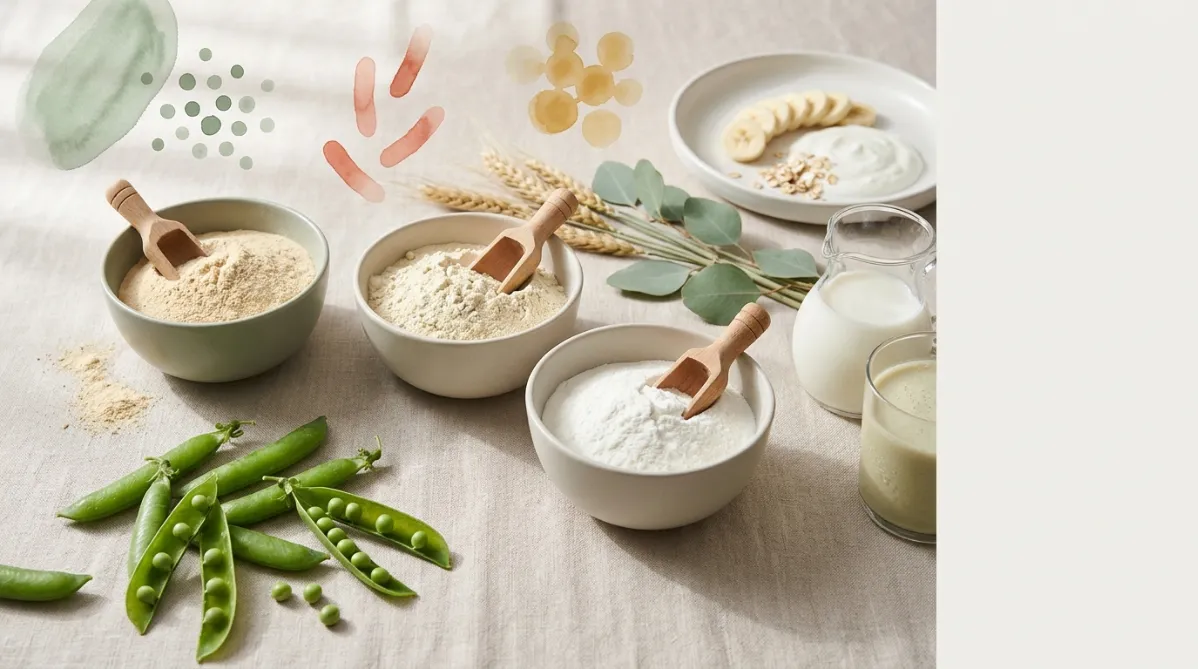
A wide, softly lit editorial flat-lay on a pale oat-colored linen surface, shot from slightly above. Three matte ceramic bowls sit in a loose diagonal across the frame. One holds fine, creamy beige pea protein concentrate, another holds paler, powdery pea protein isolate, and the third holds bright white whey protein isolate. Each bowl has a small wooden scoop resting beside it, with a few fine dustings of powder on the linen. Fresh green pea pods, split open to show round peas, spill naturally in the left foreground. A small glass pitcher of milk sits near the right edge, next to a half-full glass of a smooth, pale green-beige shake with condensation on the surface.

Behind the bowls, a few sprigs of dried wheat and soft eucalyptus leaves add organic texture. In the upper right, a shallow white ceramic plate holds a small arrangement of gut-friendly foods: sliced banana, a spoonful of plain yogurt, and a few oats. Delicate watercolor-style abstract shapes in sage green, warm coral, and soft mustard float subtly in the background. They suggest microscopic organisms, like loose dots, rods, and clustered circles, but stay painterly and minimal, not scientific or futuristic.

Natural window light enters from the left, casting long, gentle shadows and a warm, airy glow. The palette is muted and modern: sage green, cream, warm beige, blush, and touches of terracotta. The composition leaves generous clean negative space on the right third for a headline overlay. The depth of field is shallow, with the nearest pea pods and the front bowl crisp and the background softly blurred. The style is high-end wellness magazine photography with a subtle tactile, handmade feel, calm, fresh, and contemporary, in a 16:9 landscape format.
science research

Quelle poudre de protéines remodelle votre intestin ? Le pois l’a fait en 4 semaines

BY DR. GYMBRO ·

Un essai suédois de quatre semaines a comparé le concentré de protéine de pois, l’isolat de protéine de pois et l’isolat de protéine de lactosérum, en mesurant leur impact sur le microbiote intestinal. Les deux formes de protéine de pois ont modifié de façon significative la diversité du microbiote, chacune favorisant des espèces différentes. Le concentré a stimulé *Bifidobacterium longum* et *Anaerobutyricum hallii*, tandis que l’isolat a favorisé *Lactobacillus crispatus* et *Limosilactobacillus frumenti*. Les chercheurs soulignent toutefois que l’interprétation fonctionnelle de ces changements demeure incertaine.
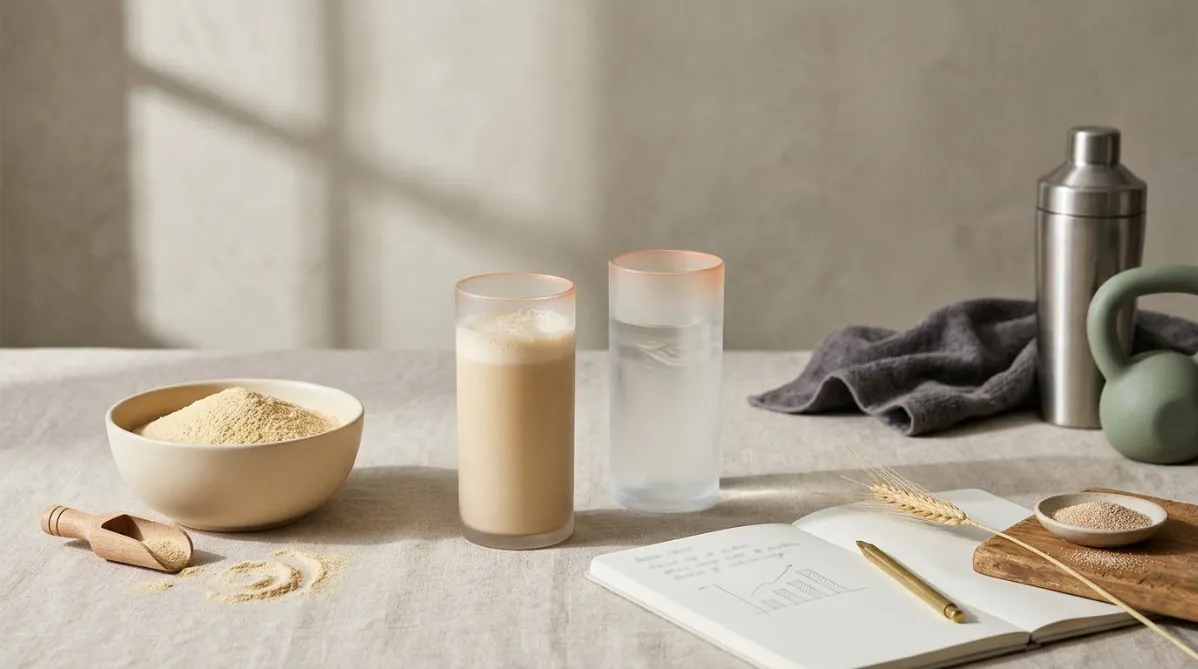
A wide, softly lit editorial still life on a pale oat-colored linen surface, shot from a slightly elevated three-quarter angle. On the left, a matte ceramic bowl in warm cream holds fine, pale golden-beige yeast protein powder, with a small wooden scoop resting beside it and a few loose dusty swirls on the linen. In the center, two tall frosted glass tumblers stand side by side. One holds a creamy, light tan shake with a delicate froth, and the other holds clear water with a faint ripple, creating a quiet visual contrast. On the right, a loosely folded charcoal gym towel, a brushed-steel shaker bottle, and a single small kettlebell in muted sage green sit slightly out of focus.

A few elements hint at the science without looking clinical. A minimalist matte-white notebook lies open with soft, blurred handwriting and a hand-drawn bar chart in thin pencil. Beside it rests a slim brass pen. A single sprig of dried wheat and a small dish of baker's yeast granules on a wooden board nod to the ingredient's fermentation origin.

Natural morning window light enters from the upper left, casting long, gentle shadows and a warm highlight along the glass rims. The palette is earthy and calm: oat, cream, soft terracotta, sage, and warm gray, with a subtle peachy glow in the background. The backdrop is a smooth plaster wall in muted putty tone, with a faint shadow of a window frame across it.

The composition leaves generous negative space in the upper third for a title overlay. Shallow depth of field keeps the glasses and bowl crisp while the gym props melt softly into the background. The overall mood is modern, wholesome, and trustworthy, with the feel of a contemporary health and nutrition magazine. The photograph has fine film-like grain and natural texture, and no text, logos, or labels appear anywhere.
recovery

Un mélange de protéines de levure rivalise avec le lactosérum pour la créatine kinase et la douleur – mais avec une limitation

BY DR. GYMBRO ·

La protéine de levure s’impose de plus en plus comme alternative durable au lactosérum. Un essai randomisé chez des athlètes entraînés a comparé un mélange levure‑lactosérum à de l’eau après un entraînement excentrique intense. Le mélange a réduit la créatine kinase et, chez les hommes, la perception de la courbature, tout en se comportant comme du lactosérum pur. Cependant, le groupe contrôle n’était constitué que d’eau, non caloriquement équilibré, et de nombreux résultats restent exploratoires après correction pour tests multiples. Voici ce que montrent les données, ce qu’elles n’indiquent pas, et qui pourrait être intéressé.
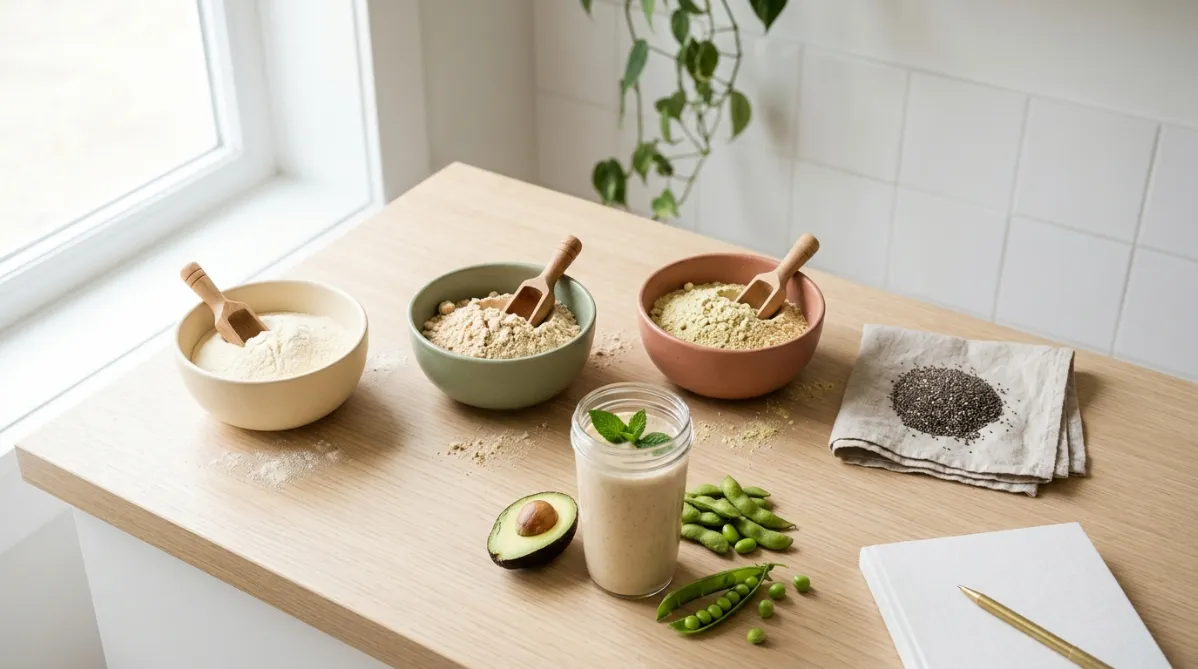
A wide landscape editorial photograph shot from above at a slight angle, showing a bright, minimalist kitchen counter of pale oak wood. Three matching ceramic bowls in soft matte tones (warm cream, sage green, and muted terracotta) sit in a loose row. Each holds a different protein powder: fine ivory whey, slightly coarser beige soy, and speckled pale yellow-green pea protein. A small fourth pile of tiny gray-black chia seeds sits apart on a folded linen napkin, off to the side, to suggest the lone outlier. Wooden scoops rest in each bowl, with a few soft dustings of powder on the surface. In the foreground, a clear glass shaker with a creamy blended drink and a single sprig of fresh mint stands beside a small stack of fresh produce: a halved avocado, a handful of edamame pods, and a few green peas in an open pod. A matte white notebook and a thin brass pen are tucked at the edge of the frame, suggesting research and note-taking. Natural morning light pours in from the left through an unseen window, casting long, soft shadows and gentle highlights on the powder textures. The color palette is calm and earthy, with creams, sage, soft terracotta, and warm wood tones, and a clean, slightly muted editorial grade. Shallow depth of field keeps the bowls crisp while the background, a blurred white tiled wall and a hint of a trailing green plant, melts away. Plenty of negative space on the right side of the frame leaves room for a headline overlay. The overall mood is fresh, trustworthy, and modern, like a contemporary wellness and science journal.
nutrition

Le lactosérum n’est pas indispensable pour les débutants ? Le soja et le pois le rejoignent

BY DR. GYMBRO ·

Vous croyez qu’il faut obligatoirement du lactosérum pour gagner du muscle quand on débute ? Une méta‑analyse récente portant sur cinq essais mesurés par DEXA montre que les protéines de soja et de pois n’ont pas, de façon significative, été en retrait du lactosérum concernant les variations de masse maigre ou de masse grasse chez des adultes non entraînés. Les auteurs soulignent toutefois que « aucune différence statistiquement significative » ne prouve l’équivalence, et que le corpus de preuves reste limité. Voici ce que les données révèlent, ce qu’elles ne montrent pas, et comment choisir et doser votre protéine. Les adeptes de protéine de chia voudront lire la partie consacrée au seul essai disponible.
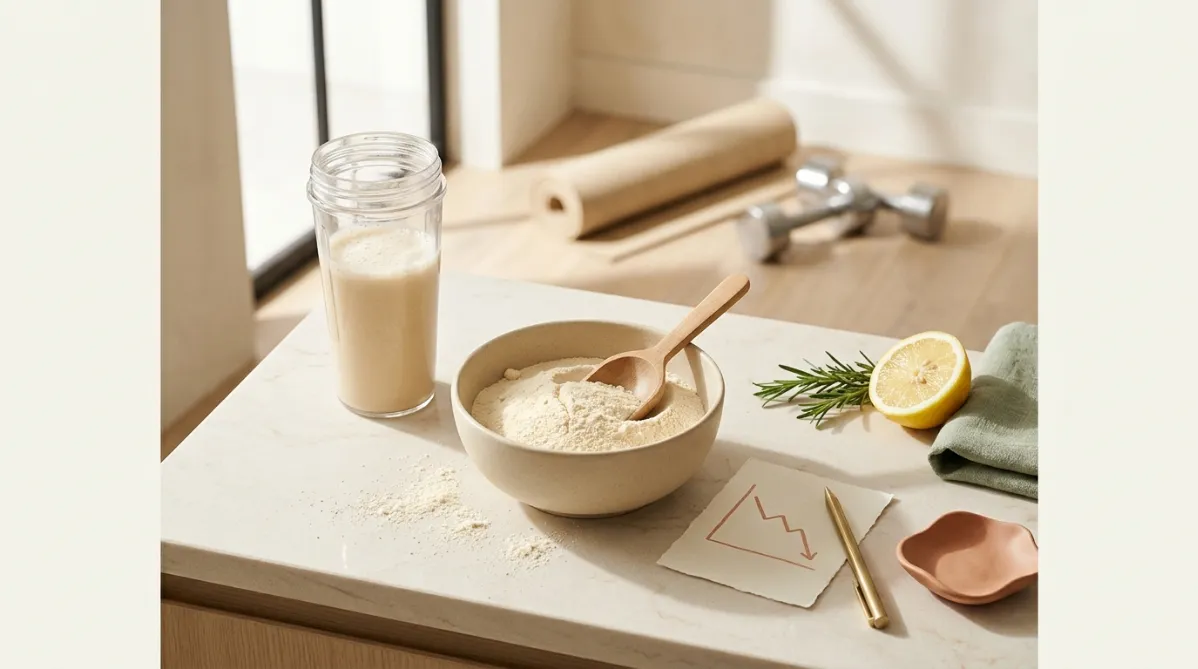
A wide, softly lit editorial still life on a warm off-white stone countertop. In the center sits a matte ceramic bowl of fine pale cream whey protein powder with a wooden scoop resting in it, a few fine grains dusted across the surface. To the left, a clear glass shaker bottle filled with a creamy, lightly frothy shake catches a gentle highlight. To the right, a minimalist arrangement of fresh produce and wellness cues: a halved lemon, a sprig of green rosemary, and a small folded sage-green linen towel. In the soft-focus background, a neatly rolled yoga mat and a pair of brushed-steel dumbbells rest on a pale oak floor beside a tall window. Morning sunlight streams in diagonally, creating long, gentle shadows and a luminous, airy atmosphere.

Subtle nods to the "liver" and "lab results" themes come through in tasteful, abstract ways: a small sheet of cream paper with a simple, hand-drawn downward-trending line graph in muted terracotta ink sits beside the bowl, with a slim brass pen laid across it. A delicate terracotta-colored ceramic dish nearby evokes organic form without being anatomical.

The color palette is calm and modern: warm creams, soft sand, sage green, muted terracotta, and touches of brushed brass. Shallow depth of field, crisp focus on the powder and scoop, with a creamy blurred background. Shot in a clean, contemporary magazine style with natural film-like grain, gentle contrast, and generous negative space on the left and right edges for headline overlay. Feels trustworthy, fresh, and approachable, like a trendy health and science journal cover.
supplements

Le lactosérum détruit‑il votre foie ? 59 athlètes affirment le contraire

BY DR. GYMBRO ·

Vous pensez que la protéine de lactosérum nuit à votre foie ? Un essai randomisé, en double aveugle, mené chez 59 athlètes entraînés a observé le contraire : après 8 semaines à raison de 30 g par jour, les ALT, AST et CK ont diminué, tandis que les groupes placebo sont restés stables ou ont augmenté. Seul l’ALT a montré une réelle différence entre les athlètes de puissance et d’endurance, et le résultat du CRP n’était qu’une tendance intra‑groupe. Voici ce que l’étude démontre réellement, ce que les marqueurs ne peuvent pas prouver et ce qui doit rester prudent.
A landscape editorial photograph in a clean, modern wellness-magazine style. On a pale oak gym bench near a sunlit window, two shaker bottles sit side by side in the foreground. The left bottle is filled with creamy vanilla-colored whey shake and slightly fogged with condensation. The right bottle is clear and filled with water, with a few lemon slices and ice cubes visible inside. Beside them are a folded sage-green towel and a small matte ceramic scoop dusted with white protein powder. A few fine powder particles hang in the air, caught in the light.

Soft golden morning light streams diagonally across the scene and creates gentle highlights on the plastic and long, soft shadows on the wood. The background is softly blurred, with a minimalist studio gym in warm neutral tones: cream walls, a rack of matte black dumbbells, and a trailing green plant in a terracotta pot. Small water droplets bead on the bench surface and catch the light like tiny lenses.

The palette is airy and restrained: warm cream, soft sage, pale sky blue, natural wood, and a touch of lemon yellow. The composition follows the rule of thirds, with the bottles placed in the lower left third and open negative space on the right for headline text. Shallow depth of field, crisp focus on the bottles, and a subtle film-like grain. The mood is calm, healthy, and aspirational, like a premium nutrition and fitness journal feature. No people, no text, no logos, and no futuristic elements.
nutrition

Votre shake de whey peut être moins efficace en cas de déshydratation pendant l'entraînement

BY DR. GYMBRO ·

Après une séance intense, vous avez englouti un gros shake de whey. Mais votre corps a‑t‑il réellement profité de tous les acides aminés ? Un essai randomisé publié dans *Nutrients* montre que les hommes ayant perdu ≈2,2 % de masse corporelle sans s’hydrater présentent une réponse en acides aminés plus faible 60 minutes après 45 g de whey que ceux qui ont remplacé les fluides. La leucine, les BCAA et le total des acides aminés étaient tous plus bas. L’étude, petite et limitée aux marqueurs sanguins, ne mesure pas la prise de muscle ; l’impact réel reste donc incertain. La solution pratique est cependant simple, et cet article explique à qui elle s’applique et comment s’hydrater intelligemment.
A wide, editorial-style flat lay shot from directly above on a pale oak table in soft morning window light. At the center, an open matte cream-colored protein powder tub sits tipped slightly, with a wooden scoop resting beside it and a small, elegant dusting of fine powder spilling across the wood grain. To the left, a neat balanced arrangement of whole foods: two soft-boiled eggs in a ceramic dish, a small bowl of Greek yogurt with a drizzle of honey, a handful of almonds, and a halved avocado. To the right, a minimalist brass kitchen scale holding a small ceramic bowl, with a handwritten notebook page beside it showing simple pencil-drawn bar charts and a few scribbled numbers, no legible text. A matte shaker bottle in muted sage green stands near the top edge, along with a folded linen napkin in warm oatmeal tone. The color palette is restrained and modern: warm creams, soft sage, terracotta accents, and natural wood, with gentle diffused shadows and subtle film-like grain. Composition leaves generous negative space on the left third of the frame for headline overlay. The mood is calm, thoughtful, and quietly skeptical, like a contemporary health and science magazine cover. Shallow depth of field, crisp textures on powder and ceramic, high-end lifestyle photography, clean and uncluttered.
nutrition

Le secret sale de la poudre de protéines : les gains disparaissent quand les calories sont équilibrées

BY DR. GYMBRO ·

La poudre de protéines améliore‑t‑elle réellement vos performances et votre récupération, ou consommez‑vous simplement plus de calories ? Une méta‑analyse bayésienne de 75 essais randomisés portant sur 1 206 athlètes a mis en évidence des bénéfices réels mais modestes. Le point crucial : chaque résultat statistiquement significatif provenait d’études où l’apport énergétique n’était pas équilibré entre les groupes. Le conseil le plus concret de l’article porte sur le dosage : environ 1 g / kg / jour supplémentaire grâce aux compléments, pour un total d’environ 2 g / kg / jour. Voici ce que les données soutiennent, ce qu’elles ne disent pas sur le timing et la source de protéine, et qui peut se passer de la boîte.
A serene, softly lit bedside scene in a modern minimalist bedroom, photographed in a warm editorial style. On a pale oak nightstand sit two matching frosted glass tumblers of creamy white protein shake, one slightly closer to the camera in sharp focus, the other gently blurred behind it. Beside them rests a small analog alarm clock with a matte cream face, its hands showing a late-evening hour, and a single ceramic scoop dusted with fine white powder on a linen coaster. A folded gray gym towel and a pair of worn sneakers are tucked at the edge of the frame, hinting at an earlier workout.

In the background, a neatly made bed with textured oatmeal linen bedding and a rumpled cream throw blanket glows under the amber light of a small paper-shade lamp. A sheer curtain filters deep indigo twilight from a window, with a faint crescent moon visible. The palette is muted and calming: warm cream, soft sand, dusty blue, and touches of terracotta from a small clay vase holding a dried pampas stem.

Shallow depth of field, gentle film-like grain, soft window light mixing with the warm lamp glow, long soft shadows across the wood grain. Composition follows the rule of thirds with the glasses on the left third and open negative space on the right, suitable for headline overlay. The mood is quiet, thoughtful, and contemporary, like a lifestyle and science feature in a trendy wellness journal. Clean, natural, tactile, with no text, no people, and no futuristic elements.
nutrition

Le lactosérum avant le coucher réduit de moitié le temps d'endormissement, la caséine non

BY DR. GYMBRO ·

Tout le monde considère la caséine comme la protéine de nuit, mais une petite étude randomisée, en double‑aveugle et en crossover, montre un résultat surprenant. Après une séance de musculation, 40 g de whey pris 30 minutes avant de se coucher ont fait chuter le temps médian d’endormissement à 9 minutes contre 19 minutes avec un placebo glucidique, tout en réduisant les courbatures du lendemain. La caséine n’a pas dépassé le contrôle de façon significative. À noter : l’échantillon ne compte que neuf participants, et le lactosérum n’a pas été statistiquement supérieur à la caséine en comparaison directe.
A wide, softly lit editorial still life on a pale warm-gray concrete surface, shot from a slightly elevated three-quarter angle. In the center-left, two matte ceramic scoops sit side by side. One holds fine ivory whey powder, the other holds slightly coarser, pale golden collagen peptide powder. A small, elegant dusting of both powders spills between them and blends into a soft swirl. Behind them, three minimalist cream and sage-green supplement tubs with no legible text stand in a staggered row, with a frosted glass shaker bottle of creamy liquid beside them.

On the right, a brushed-steel barbell plate and a compact chalk-dusted kettlebell rest slightly out of focus, suggesting resistance training. Pale wisps of chalk hang in the air. A folded charcoal gym towel and a pair of worn leather lifting straps lie in the foreground. A single cross-section of a clean white bone model, a stylized vertebra, rests on a small oak block at the far right. It subtly signals the bone-density theme without looking clinical.

Natural window light enters from the left, casting long, gentle shadows and a warm highlight on the powders. The palette is muted and modern: oatmeal, bone white, sage green, soft charcoal, and touches of warm amber. Shallow depth of field keeps the scoops tack-sharp and melts the background into creamy blur. Leave generous negative space in the upper right for headline overlay. The overall feel is a premium health and science journal cover: clean, tactile, minimalist, with fine film-like grain and a calm, editorial mood.
nutrition

Le whey + collagène surpasse les deux séparément chez les bodybuilders — mais il y a un piège

BY DR. GYMBRO ·

Mélanger 30 g de whey avec 10 g de collagène a fait mieux que la whey seule, le collagène seul ou le placebo sur tous les paramètres mesurés dans un essai de huit semaines chez des hommes entraînés en musculation. Cette association a ajouté 2,66 kg de muscle (BIA), a accru la densité minérale osseuse lombaire et a amélioré le squat, le développé couché ainsi que les marqueurs de remodelage osseux. Le collagène seul a eu un effet sur les os, la whey seule sur le muscle. Mais avec seulement 40 participants, des apports protéiques inégaux et une hausse de densité osseuse inattendue, il faut rester prudent.
A bright, minimalist editorial still life on a pale oak table, shot from a slightly elevated three-quarter angle in soft natural window light. On the left sits a rustic ceramic bowl of uncooked short-grain white rice, with a few grains scattered across the wood. Beside it is a matte cream-colored shaker bottle. On the right is a small glass bowl of fine ivory whey powder with a wooden scoop resting in it, and a small pitcher of milk behind it. Two identical tall glasses of creamy, lightly frothed shake stand side by side in the center, one a touch warmer beige and the other a soft white. They suggest equal outcomes without any text or labels. A pair of worn black neoprene-coated dumbbells and a folded sage-green gym towel sit slightly out of focus in the background. A sprig of green rice stalks in a slim vase adds a fresh, natural accent.

The palette is warm neutrals: cream, oatmeal, soft sage, and muted terracotta, with gentle shadows and a shallow depth of field. The surface has subtle grain, and fine powder dust is caught in the light. The composition is clean and balanced, with generous negative space on the upper right for a headline overlay. The mood is calm, modern, and health-forward, like a contemporary nutrition magazine or wellness journal. Photorealistic, crisp detail, creamy bokeh, and a gentle matte film-like finish.
nutrition

48 g de protéine de riz égalent le lactosérum pour le muscle et la force en 8 semaines

BY DR. GYMBRO ·

Le riz est souvent jugé inférieur au lactosérum, mais une étude de 2013 menée chez des hommes entraînés a montré le contraire lorsqu’on utilise une forte dose. Chez 24 pratiquants de musculation, 48 g d’isolat de protéine de riz post‑entraînement ont généré les mêmes gains en masse maigre, épaisseur musculaire, force et puissance que 48 g d’isolat de lactosérum pendant huit semaines. Pourquoi le riz tient‑il la route ? Probablement grâce à une dose suffisante de leucine. Voici ce que révèle l’étude, ses limites et comment les adeptes de régimes végétariens ou intolérants au lait peuvent s’en servir.

A wide, softly lit bedroom scene at dusk, styled like a modern editorial photograph. In the foreground, a rumpled bed with textured oatmeal linen sheets and a single dented pillow sits beside a light oak nightstand. On the nightstand is a tall glass of creamy, milky white protein shake, a small wooden scoop and a matte ceramic tub with no readable label, beside a minimalist analog alarm clock. The clock's hands show a late hour, and it casts a faint shadow on the wall. A pair of clean white running shoes rests on the floor by the bed. A folded gray athletic hoodie lies at the foot of the bed, suggesting an athlete's lifestyle.

Warm amber light from a bedside lamp mixes with cool blue-gray twilight from a tall window with sheer curtains. The glow lands on the glass and gives the milky surface a soft sheen. Through the window, a muted city skyline fades into evening haze.

The palette is calm and sophisticated: warm cream, soft sage green, dusty blue, and a touch of terracotta from a small ceramic vase holding dried pampas grass. The composition follows the rule of thirds, with the glass and clock in the right third and open negative space on the left for headline text. Shallow depth of field keeps the glass and clock crisp while the background blurs gently.

The mood is quiet, slightly restless, and thoughtful, hinting at a night that does not go as planned. A subtle detail, a half-drawn curtain letting in a thin stripe of light across the rumpled sheets, suggests interrupted sleep. The look is clean, contemporary, and magazine-quality, with fine film grain, natural tones, and soft shadows, like a lifestyle wellness journal cover. No people, no text, no futuristic elements.
recovery

La « protéine du sommeil » qui fait davantage se réveiller les mauvais dormeurs

BY DR. GYMBRO ·

L'α‑lactalbumine est présentée comme la « protéine du sommeil » et des études aiguës laissaient penser qu’elle pouvait aider les athlètes à mieux dormir et à performer. Un essai randomisé croisé a testé ce principe chez 24 athlètes qui rencontrent réellement des troubles du sommeil. Après une semaine de prise de 40 g deux heures avant le coucher, aucun bénéfice n’a été observé : les réveils nocturnes ont légèrement augmenté (11,01 vs 10,25) et la hauteur de saut a baissé (27,68 vs 28,58 cm). Le seul point positif était une réduction de l’humeur négative le soir.
A bright, airy, minimalist kitchen counter in soft morning light, shot from a slightly elevated three-quarter angle in a wide landscape composition. Two matching ceramic bowls sit side by side on a pale oak butcher-block surface. The left bowl holds fine, creamy-beige pea protein powder with a small wooden scoop resting in it. The right bowl holds smooth, ivory-white whey powder with an identical scoop. Between and slightly behind them sits a third, smaller empty bowl with a plain scoop, hinting at the placebo. Scattered around the bowls are fresh green pea pods, some split open to reveal bright, round peas, and a small glass bottle of milk with delicate condensation. A sage-green linen napkin is folded loosely at the edge of the frame.

In the soft-focus background, a young man in a fitted heather-gray t-shirt is seen from the shoulders down, casually flexing one arm while holding a matte shaker bottle, the biceps subtly defined and the pose relaxed and natural. A minimalist notebook with a pencil and a simple hand-drawn bar chart lies open on the counter, suggesting analysis without legible text. A small potted herb plant and a ceramic mug add warmth.

The color palette is muted and editorial: warm cream, sage green, soft terracotta, pale wood, and touches of charcoal. Light streams in from a window on the left, casting gentle long shadows and a subtle golden glow across the powders so their textures look fine and tactile. Shallow depth of field keeps the bowls crisp while the background melts into a creamy blur. The look is modern lifestyle-magazine photography, clean and uncluttered, with generous negative space on the right third of the frame for headline overlay. It is natural, appetizing, and trustworthy, in the style of a contemporary wellness and nutrition journal.
nutrition

Protéine de pois vs lactosérum : le résultat débutant que personne n’attendait

BY DR. GYMBRO ·

Peut‑on vraiment construire du muscle avec des protéines végétales aussi bien qu’avec le lactosérum ? Un essai de 12 semaines chez 161 hommes a comparé la protéine de pois, le lactosérum et un placebo, et les résultats chez les néophytes ont fait tourner les têtes : +20,2 % d’épaisseur du biceps pour le pois contre +8,6 % pour le placebo. Mais la différence sur l’ensemble du groupe n’était qu’une tendance, et la découverte la plus marquante provient d’une analyse de sous‑groupe. Voici ce que l’étude a montré, ce qu’elle n’a pas prouvé, et comment les haltérophiles vegans ou intolérants au lactose peuvent s’en servir.
A clean, editorial flat-lay photograph shot from above on a pale warm-grey stone countertop, bathed in soft diffused morning light from the left. At the center sits a matte white supplement tub with a minimal sage-green label, its lid resting beside it. A small wooden scoop spills fine cream-colored whey powder in a gentle arc across the surface, creating delicate natural texture and soft shadows. Next to the powder, a small ceramic dish holds a handful of pale tan capsules and a few tiny golden-brown ginseng root slices and fragments of dried Panax notoginseng root, hinting at the botanical origin of the ingredient. A sprig of fresh green leaves with serrated edges adds a touch of organic color on the upper right.

In the foreground, a tall glass of milky shake with a subtle frothy surface, condensation beads on its sides, sits beside a folded linen napkin in oatmeal tone. A slim brushed-steel spoon and a minimal glass of water complete the arrangement. A pair of simple, elegant reading glasses and a closed notebook with a thin pencil rest at the upper left, suggesting a researcher's desk and a thoughtful review of data, with no legible text visible.

The palette is soft and modern: warm cream, sage green, muted terracotta, pale wood, and gentle off-white, with one small accent of deep amber from the ginseng slices. Composition follows the rule of thirds with generous negative space on the right side for title overlay. Shallow depth of field, crisp focus on the powder and capsules, with the edges gently softened. The mood is calm, trustworthy, and wellness-focused, evoking a contemporary health and science magazine aesthetic. High-resolution, natural color grading, subtle film grain, minimal and airy, 16:9 landscape.
nutrition

AstraGin : l’ingrédient caché sur l’étiquette qui optimise l’absorption du lactosérum

BY DR. GYMBRO ·

Un minuscule ingrédient se glisse au bas de l’étiquette de votre pré‑entraînement : AstraGin. Un test pilote chez l’homme montre qu’il augmente l’absorption de la valine de 14 %, de la leucine de 8 % et du total des acides aminés essentiels d’environ 13 % chez les adultes de 60 à 80 ans. La zonuline sanguine, marqueur de la perméabilité intestinale, a elle‑même chuté de 13 %. En revanche, les différences de force et de masse musculaire ne sont pas statistiquement significatives et l’étude ne comptait que 30 participants. Voici ce que disent réellement les données sur l’efficacité d’AstraGin.
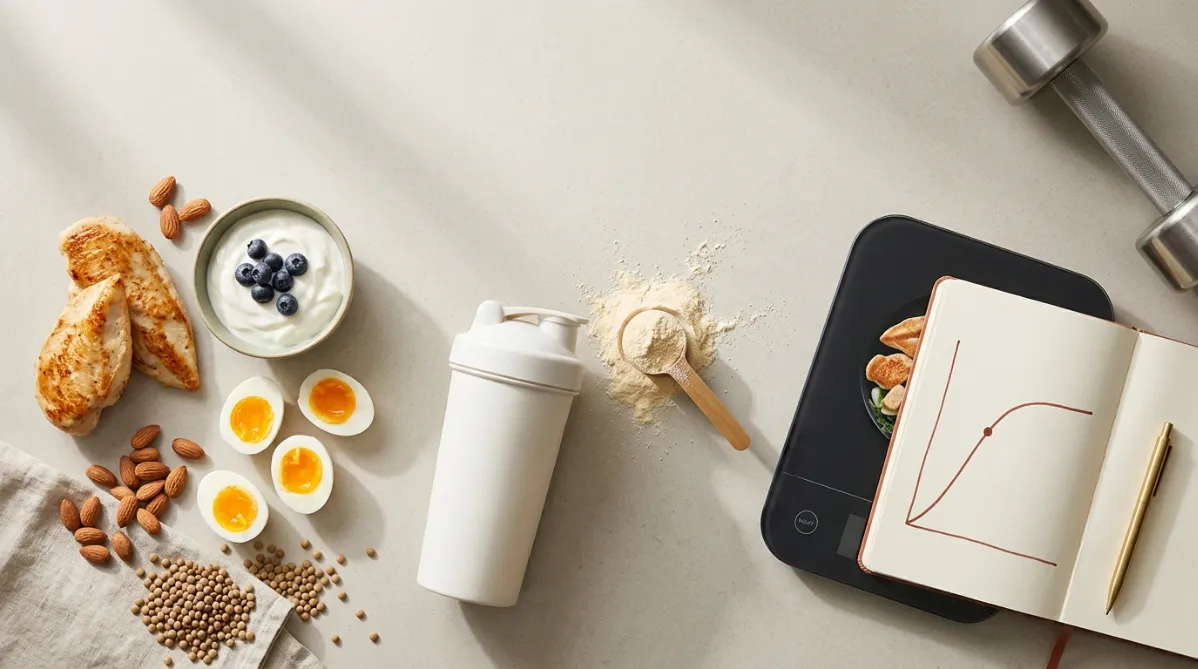
A wide, editorial flat-lay photograph shot from directly above on a pale warm-gray stone countertop, lit by soft natural morning window light with gentle diagonal shadows. On the left, a neatly arranged cluster of whole-food protein sources: two seared chicken breast slices with a golden crust, a small ceramic bowl of creamy Greek yogurt topped with blueberries, three halved soft-boiled eggs with jammy orange yolks, a handful of raw almonds, and a small pile of dried lentils scattered on a linen napkin. At the center, a matte white shaker bottle and a wooden scoop resting in a pile of fine vanilla-colored protein powder, a few grains dusted artfully across the surface. On the right, a minimalist kitchen scale in matte black displaying a portion of food, next to an open notebook with a hand-drawn curve that rises steeply and then flattens into a plateau, drawn in a deep terracotta ink pen, with a small dot marking the bend. A brass pen lies beside the notebook. A single dumbbell with a brushed steel finish sits partially in frame at the upper right corner, grounding the fitness theme without feeling gym-like. Color palette: warm cream, sage green, terracotta, soft charcoal, and butter yellow accents, with generous negative space along the top edge for title overlay. Shallow depth of field, crisp textures, subtle film grain, modern lifestyle magazine aesthetic, clean and calm composition, 16:9 landscape.
nutrition

Quelle quantité de protéines optimise réellement la prise de muscle ? Le plateau à 1,6 g/kg expliqué

BY DR. GYMBRO ·

Vous pensez qu’il faut plus de 2 g de protéines par livre de poids corporel pour développer vos muscles ? Une méta‑analyse de 49 études, portant sur 1 863 adultes en bonne santé, montre que les bénéfices plafonnent autour de 1,6 g/kg par jour. L’intervalle de confiance s’étend jusqu’à environ 2,2 g/kg, offrant ainsi une fourchette réaliste au lieu d’une dose astronomique. Les athlètes déjà entraînés tirent le plus profit de la supplémentation, tandis que l’avantage diminue avec l’âge. Voici ce que ces chiffres impliquent pour votre assiette, votre shaker et votre portefeuille.

This page is available in